-
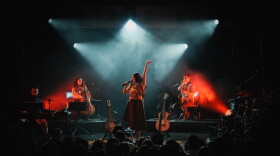 From Silvana Estrada to Chuwi, a new wave of Latin indie artists is finding its way to South Florida. Escala Sonora, a Miami-based live concert series and event promoter, explains how its itinerant approach is shaping the local music scene.
 -
 Leslie Roberts pleaded guilty earlier this year to conspiring to sell fake artwork from his Miami Fine Art Gallery on Commodore Plaza. The FBI raided the gallery in April 2025, arresting Roberts the same day.
 -
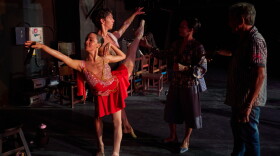 Cuba is facing severe challenges, with blackouts and shortages affecting daily life. Yet classical ballet remains a cherished cultural institution. The National Ballet School in the capital of Havana continues to train young dancers, blending rigorous dance instruction with academics.
 -
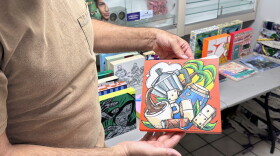 El Fresco Art Space, the independent gallery and creative hub for local contemporary and urban artists, has moved into the historic Optica Lopez building on Calle Ocho.
 -
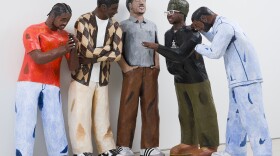 A cross-section of the Miami art scene can be found just north in Fort Lauderdale, where NSU Art Museum’s latest group exhibition, “Close to Home,” brings together nearly two dozen artists with ties to the city.
 -
 “Margaritaville is kind of like the gateway to thinking about a certain kind of straight white culture in Florida, but then maybe the U.S. more broadly,” Gone says.
 -
 Curated by Dimitry Saïd Chamy and Charo Oquet and presented by Edge Zones, the group exhibition at the Miami Beach Regional Library on display through Thursday, July 16, features 16 artists whose practices move fluidly across sound, code, fiber, video, printmaking, painting,
 -
 For the 61st Venice Biennale, Haitian-American artist Edouard Duval-Carrie was selected to represent Haiti at the 61st Venice Biennale, an art exhibition held in Venice, Italy.
 -
 West Palm Beach artist Molly Leach, a pharmacist, injects her canvas with ‘the science that I love.’
 -
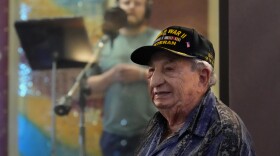 Just before his birthday, his song "If Freedom Was Free" was released by Big Machine Label Group and CreatiVets. Locker collaborated with Texas singer-songwriter Bart Crow and duo Johnny and Heidi Bulford.
 -
 With its efforts to bring the art and environment closer together since 2001, the non-profit Artists in Residence in the Everglades (AIRIE) has not only grown in size, but in depth. Each year, the organization selects approximately 12 artists to be part of their residency program, which lasts for one calendar month, where artists stay in a cabin within the Everglades National Park.
 -
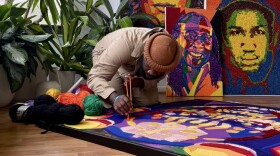 Harold Caudio, known for Skittles portraits of stars like Bob Marley and Janet Jackson, now turns to a hand-sewn yarn project honoring women's strength as he makes his debut at the Cornell Art Museum.

© 2026 WLRN
Play Live Radio
Next Up:
0:00
0:00
Available On Air Stations


