

Tom Hudson
CEO | WLRNTom Hudson is the chief executive officer of South Florida Public Media Group, the independent operator of WLRN Public Media.
Hudson has been a journalist, manager and educator for over 30 years.
His extensive reporting on South Florida's economy has taken him from the waters of Florida Bay to the depths of the PortMiami tunnel (and countless offices and conference rooms). He has interviewed bartenders and bankers, caregivers and CEOs to report on the people behind economic statistics.
He began his business reporting career in March 2000, just weeks after the dot-com bubble burst. He has reported from the trading floors of the CME, Chicago Board Options Exchange, NASDAQ and New York Stock Exchange. He previously served as Vice President of News at WLRN when he created and hosted The Sunshine Economy for 10 years. He was managing editor and co-anchor of Nightly Business Report on PBS.
He is an adjunct at the University of Miami and has taught at the University of Florida and Columbia College Chicago.
He began his journalism career in distribution. He was a newspaper boy for the Des Moines Register.
Hudson is married with two sons and advises every bicycle rider to always wear their helmet.
-
 WLRN's Christine DiMattei, Daniel Rivero and Tom Hudson go over their memories of the event and its consequences, discussing the disaster and its lasting impact.
 -
 High pump prices are attention grabbing, but there's more to inflationary pressures turning up again.
 -
 Kicking off in just a month is the biggest sporting event South Florida has ever hosted: the 2026 FIFA World Cup. But it comes with a price tag to match — and reports of lackluster visitor demand in some host cities. With seven matches scheduled to be played at the Hard Rock Stadium, WLRN looks at how much taxpayers are on the hook for and how much they might get back from the event.
 -
Florida's citrus industry is in deep decline and growers are trying to hang on as they find ways to withstand disease and disasters.
-
 Most of the affected jobs, just over 2,500, were employees based at Fort Lauderdale-Hollywood International Airport. Another 550 jobs were cut from Spirit’s Dania Beach headquarters in Broward County.
 -
 Spirit was the dominant airline at the Fort Lauderdale airport. It was responsible for a third of passenger traffic and 13% of Broward County’s aviation revenue. Spirit’s one-time merger partner, JetBlue, has moved the fastest, announcing expanded service at FLL.
 -
 Florida’s private passenger train service saw its business grow in 2025, but not fast enough to keep up with its approaching debt requirements. Brightline’s annual report shows while ridership and revenues increased, it is burning through cash.
 -
 Spirit Airlines is preparing to stop flying. But the timing of a final decision is uncertain, The Wall Street Journal reports. President Donald Trump, however, says he’s still looking at a taxpayer-funded takeover of Spirit Airlines.
 -
 South Florida boasts two of the three largest realtor associations in the country. They will merge in May into a mega agency with 93,000 brokers.
 -
 Miami Mayor Eileen Higgins said the city "has to be ready to go" if voters approve any constitutional amendment to reduce or erase most property taxes for homeowners. There is no ballot referendum yet, despite promises by Gov. Ron DeSantis.
 -
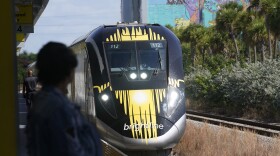 March was a record month for Brightline, carrying almost 11,000 passengers on the average day. Yet, the service still is rushing to fix its finances as it gets a little more time to pay some of its debts.
 -
 The e-commerce company is renovating its Homestead warehouse less than two years after opening it. The re-tooling will take about two years and means over 600 jobs will be cut.


